HDMI high-definition copper wire technology has undergone fifteen years of development, starting from the initial version 1.0 in 2002, progressing through versions 1.1, 1.3, 1.4, and 2.0, and now entering version 2.1. However, as everyone knows, the biggest drawback of HDMI copper wire is its inability to transmit over long distances. Once the distance exceeds 15 meters, signal loss occurs, and the faster the transmission speed, the greater the attenuation, which may lead to issues such as signal loss or reduced resolution. Generally speaking, HDMI copper wire struggles to transmit an 18Gbps bandwidth beyond 15 meters. So, what about transmitting 48Gbps, 56Gbps, or even larger bandwidths? If the cable is too short, its applicability will be severely limited. For larger private theaters or commercial and office spaces, HDMI copper wire seems "willing but unable," failing to meet consumers' new demands in this regard. The market urgently desires the emergence of a lighter, thinner, and longer HDMI cable. Under such technological development and market demand, fiber optic HDMI cables have emerged. Now, discussions about fiber optic HDMI cables are growing louder in the market. Does the emergence of fiber optic HDMI cables truly mean the end of copper HDMI cables? Is the replacement of copper HDMI cables by fiber optic HDMI cables mere hype or an inevitability? These questions are likely to provoke deep reflection and consideration among many copper HDMI cable manufacturers, while also causing confusion and anxiety. So, what should copper HDMI cable manufacturers do? How can they grasp the future direction of the HDMI industry? To address these confusions, we might start by comparing and analyzing the following aspects:
Fiber optic cables are very thin, light, and flexible, whereas copper-core cables are relatively thick, heavy, and rigid.
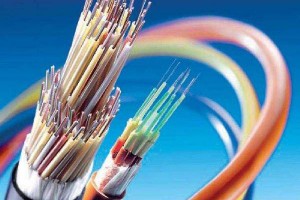
Fiber optic HDMI cables use fiber optic cores, typically made of glass fiber material, while ordinary HDMI cables use copper-core wires. Since the diameter of fiber optics is thinner than a human hair, fiber optic cables are lightweight, thin, small in volume, and light in weight. Under the same specifications, fiber optic HDMI cables can reduce volume and weight by approximately 60% compared to traditional copper cables. HDMI cables made of fiber optic material will end the era of thick and bulky copper high-definition cables. Making bulky things lightweight has always been a dream and direction pursued by humanity. With the advancement of technology and the times, HDMI cables also need to meet people's aspirations! Moreover, fiber optic cables are inherently very flexible, resistant to bending and folding, making them easy to install and lay, and more suitable for large-area wiring. With an outer diameter of only 4.0mm, they are also more suitable for installation in narrow spaces.
The chips are different.
Fiber optic HDMI cables use photoelectric conversion chip engine technology, requiring two photoelectric conversions to achieve signal transmission. First, electrical signals are converted into optical signals, which are then transmitted through the fiber optic cable. The optical signals are then converted back into electrical signals, enabling effective transmission from the SOURCE end to the DISPLAY end. This reduces various signal interferences during transmission, achieving true ultra-clear transmission. Conventional HDMI cables use electrical signal transmission and do not require two photoelectric conversions.
Transmission effectiveness differs.
As mentioned above, fiber optic HDMI cables and conventional HDMI cables use different chip solutions, resulting in differences in transmission performance. Generally, because photoelectric conversion requires two steps, fiber optic cables themselves consume power. If the voltage drops, it may affect picture quality, such as making the image appear less vibrant, reducing contrast, or significantly increasing noise. If the conversion circuit overheats, the stability of the cable may also be affected. HDMI copper cables do not have these issues, and in terms of compatibility, copper cables perform better than fiber optic cables. Therefore, for short cables under 10 meters, the difference in transmission time between fiber optic HDMI cables and conventional HDMI cables is not significant, making it difficult to declare an absolute winner in performance for short cables. Even based on audiophile principles, copper-core HDMI cables may outperform fiber optic HDMI cables in sound quality. However, in long-distance transmission, the weaknesses of ordinary copper-core HDMI cables become apparent. To be precise, distances exceeding 10 meters (or even shorter for poorly made products) make it extremely difficult to achieve 4K@60Hz signal transmission, often resulting in dropped frames or screen artifacts. Even if transmission is possible over longer distances, signal attenuation can be severe. At distances of 20 or 30 meters, the performance of copper-core HDMI cables diminishes significantly, requiring signal amplifiers to achieve up to 1080P signal transmission. The advantage of fiber optic HDMI cables lies precisely in long-distance transmission. Fiber optic HDMI cables can support lossless transmission of 4K@60Hz signals over distances exceeding 150 meters without the need for signal amplifiers. Additionally, because fiber optics are used as the transmission medium, the high-fidelity effect of the signal is superior, and it is not affected by external electromagnetic radiation, making it ideal for gaming and high-demand industries.
Production costs.
Currently, fiber optic HDMI cables are still in the early stages of development, with a relatively small industry scale and user base. Only a few manufacturers in China can produce them. Overall, due to the small scale of production, fiber optic HDMI cables remain expensive. Roughly speaking, if a standard copper HDMI cable costs 20 yuan, a fiber optic HDMI cable may cost around 200 yuan, making it about ten times more expensive than ordinary copper HDMI cables. Therefore, conventional copper-core HDMI cables remain irreplaceable in terms of cost-effectiveness.
Application scope.
Fiber optic HDMI cables have a broader application scope. They already comply with the HDMI 2.0 standard, allowing direct transmission of 4K@60Hz ultra-clear signals without distance limitations. They can be used in various scenarios requiring high-definition image display devices and large-area wiring connections, such as home theater systems, remote information release systems, broadcast television control systems, public security high-definition surveillance systems, high-definition video conferencing office systems, multimedia systems, large-scale medical imaging systems, and industrial automation systems.
Broadband speed increase is an inevitable future trend.
Currently, 4K TVs and projectors have become widespread, and major manufacturers at home and abroad have already developed 8K TVs, which are just one step away from widespread adoption. Due to the bandwidth limitations of copper-core HDMI cables, they are destined to play a limited role in the upcoming 8K and HDMI 2.1 era. Although the advantage of long-distance transmission for HDMI fiber optic cables is not yet prominent with the current mainstream 18Gbps bandwidth, this may change in the future. We can simply calculate: the transmission limit for HDMI copper cables is 35 meters (with an amplifier), and for an 18Gbps bandwidth, it is best not to exceed 15 meters; otherwise, applicability may be limited, such as being able to transmit images to a projector but not to a TV as a display device. The upcoming 48Gbps bandwidth is about 2.6 times that of 18Gbps. To transmit such a large amount of data, HDMI copper cables would require more copper wires and shorter lengths to enhance conductivity and reduce losses. It is imaginable that HDMI copper cables would then be severely limited in weight and length, likely only 2-3 meters long, which would be insufficient for ceiling-mounted projectors at home. In contrast, HDMI fiber optic cables do not face bandwidth limitations.
From the above comprehensive analysis, it is clear that fiber optic HDMI cables are highly likely to dominate the high-definition signal transmission market in the future. However, copper-core HDMI cables remain the most mainstream option in the current market, while fiber optic HDMI cables are still in the development stage and generally more expensive. For users, there is no need to use fiber optic HDMI cables for short distances, as copper-core HDMI cables already meet daily work, study, and entertainment needs well. For engineering applications, careful consideration of budget and choices is necessary, as the advantages of fiber optic HDMI cables in long-distance applications are undeniable. However, copper HDMI cable manufacturers must adapt to technological updates in the industry and adjust their development direction promptly to avoid being phased out by the market. After all, copper HDMI cables are already in their "middle-aged to elderly" stage, while fiber optic HDMI cables are just in their "infancy"!
Finally, it is worth mentioning that in this trend of HDMI industry updates, Zhongshan Hongsen Electronics Co., Ltd., as one of the few high-tech enterprises in China capable of producing fiber optic HDMI cables, has not fallen behind. The company has already positioned itself in this field and timely released its fiber optic HDMI-related products. Customers interested in learning more can visit the company's Alibaba website for details!
 WhatsApp
 Follow WeChat